You may find the need to Reset NVRAM or PRAM on Mac, if it is going through persistent problems with its display resolution, volume, time/date, mouse and keyboard related problems.
While issues requiring NVRAM/PRAM reset are usually noticed after installing an update or making hardware changes, they can also occur at any other time.
When you reset NVRAM (Non-Volatile Random-Access Memory), it results in settings for display, volume, time/date and others being reset to Factory Default Settings.
If you have an older Mac, the settings are stored in PRAM (Parameter Random-Access Memory), which serves the same function as NVRAM on a newer Mac.
When to Reset NVRAM on Mac?
It is time to reset NVRAM (Non-Volatile Random-Access Memory), when you notice the following issues.
- Problems controlling volume.
- Volume keeps resetting.
- Mac starts with a question mark folder.
- Mac shows incorrect Date/Time or Time Zone.
- The screen resolution keeps changing on Mac.
If you have an older Mac using PRAM (Parameter Random-Access Memory), the issues listed above plus the following additional issues.
- Mac is not charging properly.
- Mac showing incorrect battery percentage.
- Drives not appearing on Mac.
- Problems with Bluetooth or AirPort Mode.
- Problems with Mouse and other External Devices.
- Hardware related problems in General.
If you are experiencing any of these issues, the chances are that the data stored in NVRAM (or PRAM) on your Mac has changed or causing conflicts and needs to be reset.
Luckily, it is easy to Reset NVRAM/PRAM on Mac, which basically makes the NVRAM/PRAM settings go back to their original or Factory Default Settings.
The steps to Reset NVRAM on Mac vary, depending on whether your Mac is powered by Intel Processor, Apple M1/M2/M3 Processor and also if its is equipped with Apple T2 security chip.
1. Reset NVRAM on Mac with Apple M1/M2/M3 Processor
If your Mac is equipped with the latest Apple M1/ M2/M3 processor, the system automatically handles the Reset process, upon restart.
Hence, all that is required to reset NVRAM on a Mac with M1/M2/M3 processor is to restart your device and it should automatically reset NVRAM, if it finds any errors during the startup process.
2. Manually Reset NVRAM on Intel-based Macs
Disconnect all External Drives from Mac (except External Keyboard) and follow the steps below to Reset NVRAM or PRAM on a Mac powered by Intel-based processor.
1. Use the Volume Up button to increase the volume on your Mac.
2. Click on Apple Icon in top-menu bar, click on Shut Down and wait for your Mac to completely shut down.
3. Press the power button to start Mac and immediately press & hold Option + Command + P + R keys.
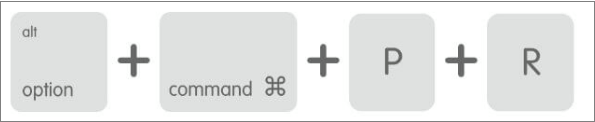
4. Keep holding down the 4 Keys as you hear the first start-up sound and release the Keys after the second start-up sound.
3. Reset NVRAM on Intel-based Mac with T2 Chip
If your Mac is equipped with Apple T2 Security Chip, the steps to Reset NVRAM are the same as above, except for a minor difference while releasing the keys.
1. Press the power button to start Mac and immediately Press & Hold Option + Command (Alt) + P + R keys.
2. Keep holding down the 4 Keys as Mac starts with Apple Logo and release the Keys after Apple Logo appears and disappears for the second time.
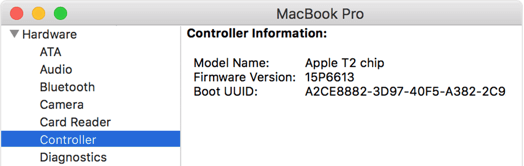
To check whether your Mac is equipped with T2 chip, click on Apple Logo > About This Mac > System Information > Controller and look for Model Name entry in the right-pane.
Grey Screen After NVRAM Reset
If you have properly followed above steps to reset NRAM and it has resulted in Mac showing a Grey screen for several minutes, it is most likely due to connected devices interfering with the reset process.
To fix this issue, disconnect all the Devices connected to your MacBook (except Mouse & External keyboard) and follow the steps to reset NVRAM/PRAM on your Mac.