Windows provides the option to designate a particular printer as the default printer on the computer, which ensures that all the Print jobs are always sent to your preferred printer.
Setting a default printer can be useful if your computer has access to multiple printers (as in an office) and you want to make sure that your print jobs are always going to a nearby or a preferred printer.
Selecting a default Printer ensures that you always know the Printer to which your documents are being printed and this can help in preventing the possibility of your personal or confidential documents being exposed during the printing process.
Set Default Printer in Windows 11/10
While setting a default Printer ensures that all the print jobs are being sent to your preferred printer, it does not prevent you from printing to other printers on the network.
For example, even if Home Printer is set as the default on your computer, you will still be able to print to any printer at your Office by selecting the Office Printer in the Print dialogue box.
You can find below different methods to Set Default Printer on a Windows computer and also the steps to prevent Windows from switching to another Printer.
1. Set Default Printer Using Text File
Perhaps the easiest way to set default printer on a Windows computer is by opening a New text document.
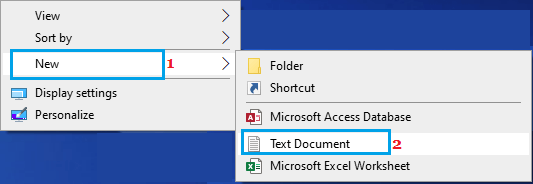
1. Right-click in an empty space on the Desktop and select New > Text Document option.
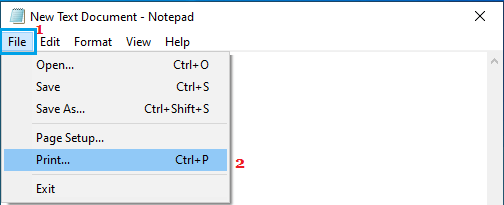
2. Open the new Text Document that you just created > click on the File tab and select Print option in the drop-down menu.
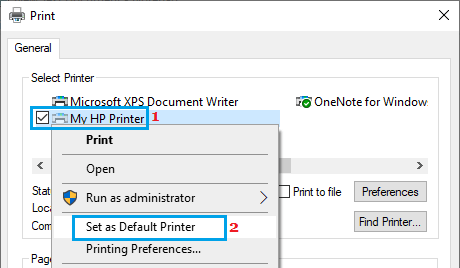
3. On the next screen, right-click on your desired Printer and select Set as Default Printer option.
2. Set Default Printer Using Control Panel
Although, Microsoft has moved “Devices & Printers” to Settings; it is still possible to go directly to the Devices & Printers screen by using Control Panel and Set Default Printer.
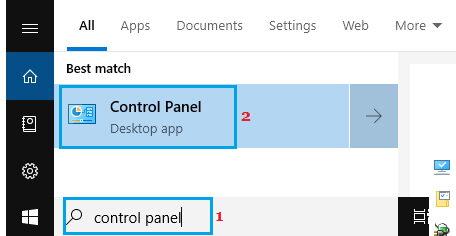
1. Type “control panel” in the Search bar and click on Control Panel in the search results.
2. On the Control Panel screen, switch to Large Icons view > right-click on Devices & Printers. and click Open.
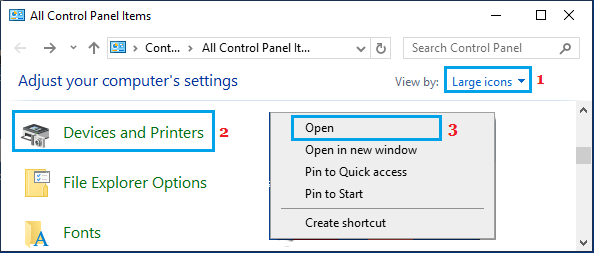
Note: Make sure you right-click on Devices & Printers, directly clicking on Devices and Printers will lead you to the Settings App.
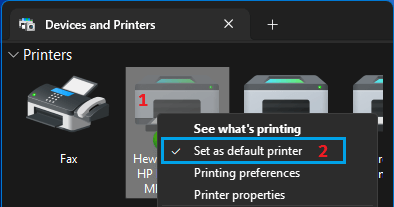
3. On the next screen, right-click on your desired Printer and select Set as Default Printer option.
3. Set Default Printer Using USB Drive
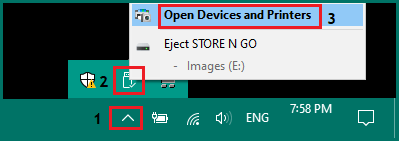
Attach a USB Drive to any of the USB ports on the computer and this should provide you with access to “Open Devices & Printers” shortcut.
1. Open System Tray > right-click on the attached USB Drive and select Open Devices and Printers option.
2. On the next screen, right-click on your desired Printer and select Set as default printer option.
Note: At the time of writing, this method worked flawlessly on both on Windows 10 and Windows 11 computers.