If your computer is equipped with S Mode, you won’t be able to install Google Chrome and other third-party apps on your computer. Hence, Microsoft provides the option to disable S Mode, if you find the need to use third-party apps, browsers, antivirus programs and tools on your computer.
The idea behind S Mode (Secure Mode) is to ensure the security and optimal performance of a Windows computer by restricting app downloads to Microsoft store only. However, this has also become the primary reason for users looking for a way to disable S Mode on a Windows computer.
Disable S Mode on Windows Computer
Before going ahead with the steps to disable S Mode on a Windows computer, you need to be aware that the switch from S Mode to regular version of Windows is permanent. You won’t be able to go back to S Mode, once your device has come out of S Mode.
After the computer is out of S Mode, it becomes your responsibility to make sure that you are downloading apps from reputable sources and taking the required steps to ensure the security and performance of your device.
Note: Make sure you that you take look at advantages and disadvantages of disabling S Mode, as provided below in this guide.
1. Disable S-Mode in Windows 11/10
As mentioned above, Microsoft provides the option to switch your computer of S Mode; if you find the need to install any third-party app due to your work, business or personal requirements.
1. Click on Start button > click on the Gear shaped Settings Icon in start menu.
2. On the Settings screen, select System in the left-pane. In the right-pane, scroll down and click on Activation.
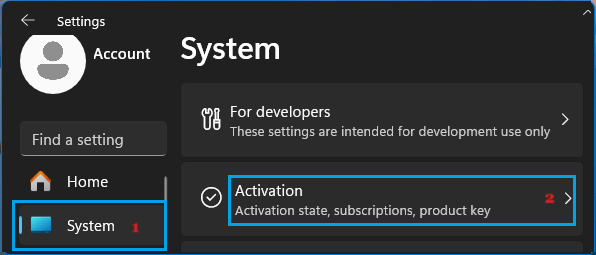
Windows 10: Go to Settings > Update & Security > click on Activation.
3. On the next screen, go to “Switch to Windows Home/Pro” section and click on Go to Store link.
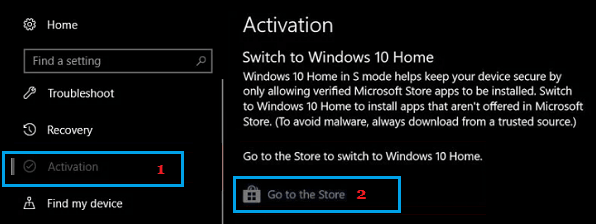
Attention: Do not click on Go to Store link, located under “Upgrade your Edition of Windows” section.
4. On the Microsoft Store page, click on the Get button to start the process of switching the computer from S Mode to regular version of Windows.
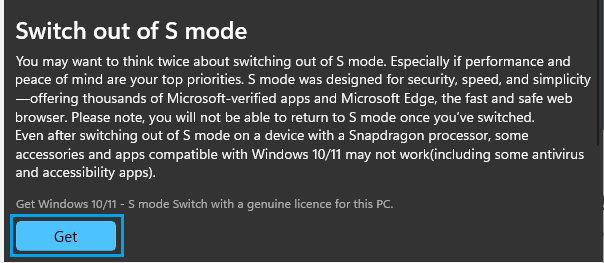
Note: If you are not signed-in to Microsoft Account, you will be prompted to Sign-in to Windows Store using your Microsoft Account.
5. Once S Mode is switched OFF, you will see a pop-up, confirming that S Mode has been switched OFF and you can now install Apps from outside Microsoft Store on your computer.
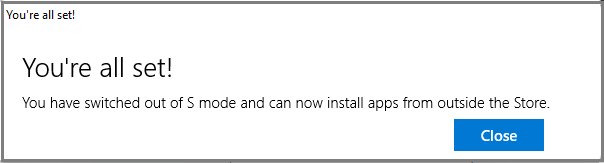
6. Click on the Close button to dismiss the pop-up.
Now that your computer is out of S Mode, you can download apps from third-party sources and gain access to more customization settings and tools on your computer.
Advantages of Disabling S Mode
As mentioned above, the primary reason for disabling S Mode on a Windows computer is to bypass the restriction placed by S Mode on download of apps, games, desktop programs and tools from third-party sources.
In addition to this, disabling S Mode allows you to modify system settings and customize the device to suit your own individual or work place requirements by using advanced command-line tools like Command Prompt, PowerShell and Registry Editor.
Also, the switch from S Mode to regular version of Windows is provided by Microsoft at no additional cost to the customer and it has no impact on personal files, underlying firmware and the ability of the computer to download software and security updates from Microsoft.
Disadvantages of Disabling S Mode
Since, the switch from S Mode to regular version of Windows is one-way and permanent, you might be interested in knowing the potential disadvantages of disabling S Mode.
1. Security: Switching off S Mode increases the chances of your device being exposed to malware and security threats, as third-party apps are not verified by Microsoft.
2. Performance: Increased background process requests from third-party apps in addition to native and Windows Store apps can slow down the system.
3. System Stability: Increased potential for system instability and performance issues, if incompatible or poorly coded apps from less reputable sources are installed on the computer.
4. System Crashes: Increased potential for system crashes and data loss, if access to System Settings, System Files, Command Prompt, Registry Editor and other tools is not responsibly used.