When you Backup iPhone to Mac, the Finder App stores the Backup File of your iPhone to a hidden system Folder, without offering any way to change the backup location.
However, it is possible to change the iPhone Backup Location on Mac to Desktop, External storage drive or to any other Location on your computer by using a workaround.
The workaround as provided below requires the creation of a Symbolic link pointing from the default iPhone Backup Folder on Mac to your desired New Location.
Once the Symlink is created, it tricks the Finder into making a backup of iPhone to New Location (Desktop, External Storage or other location).
Change iPhone Backup Location on Mac
Since, the process to change the iPhone Backup Location on Mac is a bit lengthy and complicated, we have divided this process into the following 3 steps.
- Copy Current iPhone Backup to New Location
- Grant Full Disk Access to Terminal
- Create Symlink to iPhone Backup Location
Step 1. Copy Current iPhone Backup to Desktop
The first step is to copy the current iPhone Backup Folder to Desktop or any other Location, where you to save iPhone Backups.
1. Click on the Finder Icon > select the Go tab in top-menu bar and click on Go to Folder.
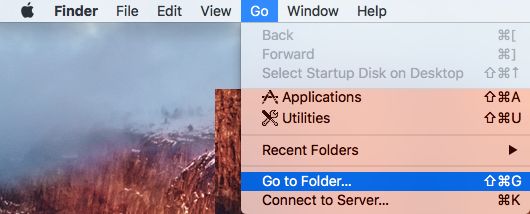
2. In Go to window, type ~/Library/Application Support/MobileSync/Backup/ and click on the Go button.
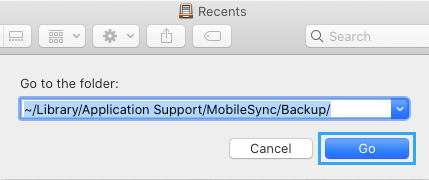
3. Right-click on the Backup Folder and select Copy Backup option.
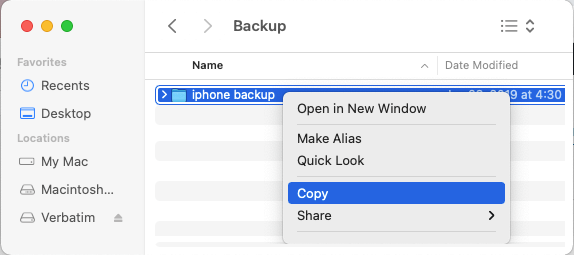
4. Next, open New Finder window (Command + N) and go to Desktop or any other Location where you want to save iPhone Backup.
5. Once you are on the Desktop (or any other desired location), right-click in any empty space and select the Paste Item option.
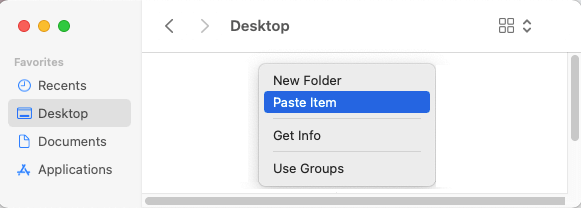
Note: You can select External storage drive or any other Folder ot Location on your MacBook as the New Location for iPhone Backups.
6. Wait for iPhone Backup Files to be copied to the New Location. This process can take a while, depending on the amount of data to be transferred.
7. Once the Files are copied, go back to the previous iPhone Backup Location and Rename the Backup Folder as Old iPhone Backup.
Step 2. Grant Full Disk Access to Terminal
The next step is to grant full disk access to the Terminal App on your Mac.
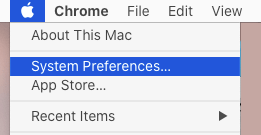
1. Click on Apple Logo in top-menu bar and select System Preferences in the drop-down menu.
2. From the System Preferences screen, go to Security & Privacy > select Full Disk Access in the left-pane and select Terminal App in the right-pane.
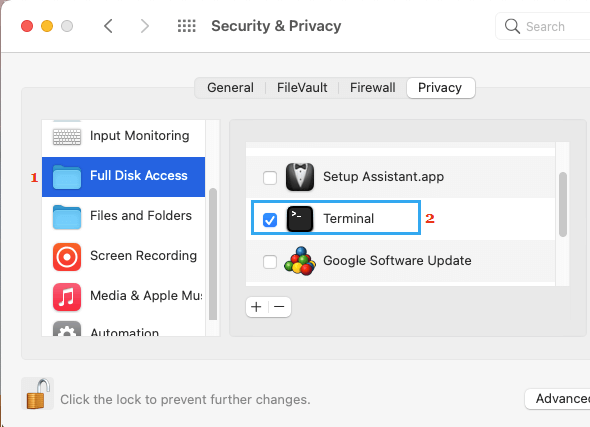
Note: If the selection is locked, click on the Security Lock > Enter your User Name and Admin Password to allow changes.
If the Terminal App is not available for selection, click on the + icon > go to Utilities > Terminal and click on Open.
Step 3. Create Symlink to iPhone Backup Location
Once the Terminal has Full Disk Access, you can follow the steps below to create a Symbolic Link from the default iPhone Backup Folder to your New Location for iPhone Backups.
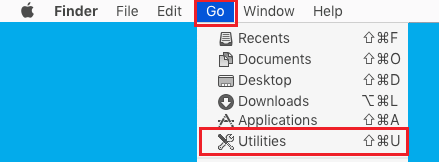
1. Open Finder > click on the Go tab in top-menu bar and select Utilities in the drop-down menu.
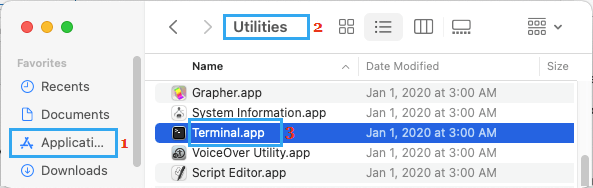
2. On the Utilities screen, click on Terminal.app to Launch the Terminal on your MacBook.
3. On the Terminal screen, type sudo ln -s /Volumes/Desktop/iPhone Backup/~/Library/Application\ Support/MobileSync/Backup and press the Enter key.

This will create a Symlink connecting the default iPhone Backup Folder to New Backup Location, which will force the Finder to Backup iPhone to your desired New Location.