While you can execute many Run Commands from a Local User Account, you will be required to execute Run Command as Admin for performing advanced tasks that require Admin privileges.
In general, commands that change file/user permissions or modify core system settings require Run Commands to be executed with Admin privileges.
For example, you won’t be able to execute wsreset (reset Windows Store) command without admin rights, while commands like msinfo32 (open system information), regedit (open registry) can be executed without admin rights.
In certain other cases, you may find that a “Run Command” provides limited access to functionalities, when it is executed without Admin rights.
Execute Run Command as Administrator
If you find the need to Run Command as Admin, it does not necessarily mean that you need to Logout from your Local User Account and Login to Admin Account.
You can execute Run Command As Admin from within any Local User Account on your computer by using the keyboard shortcut method as provided below in this guide.
1. Execute Run Command as Admin Using Keyboard Shortcut
An easy way to execute Run Command as Admin from a Local User Account is by using Ctrl + Shift + Enter keyboard shortcut.
1. Right-click on the Start button and click on Run.
2. On the Run Command screen, type the Name of the App, Program or Command that you want to Run as Admin and press Ctrl + Shift + Enter keys on the keyboard of your computer.
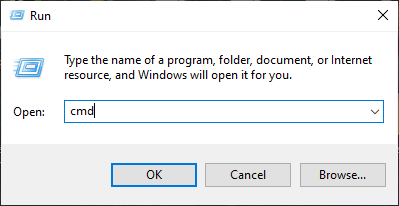
Note: Do not click on OK or press the Enter Key, as this will run the Command as a regular User and not as Admin.
3. On the next screen, enter your Admin Account Password and click on OK.
Once you click on OK, the Command that you had typed into the Run Command Box will be executed with Admin privileges.
2. Execute Run Command As Admin From Task Manager
If you are logged-in to a User Account with admin rights, you can execute Run Command as Admin by creating a New Task using Task Manager.
1. Right-click on the Taskbar and click on Task Manager.
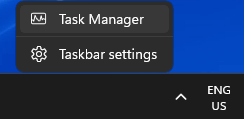
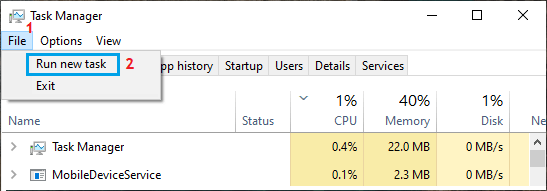
2. On the Task Manager screen, click on the File Tab and select Run New Task option.
3. On the next screen, type the Name of the File, App or Command that you want to open and check Create this task with administrative privileges box.
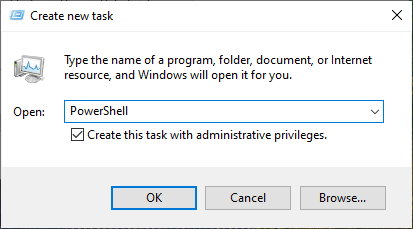
4. Click on OK or press the Enter key to execute the command as Admin.