Windows operating system provides the option to create System Image Backups, which can be used to restore the computer back to its normal or regular working condition.
This is possible, because a “System Image Backup” is a complete snapshot of the hard drive of the computer. It contains the operating system files, system settings, apps/programs, photos and all your personal/work files.
If anything goes wrong with the computer, it can be swiftly restored back exactly to the same status that it was in, when the System Image was created.
Restore Windows Computer Using System Image
In order to System Restore Windows computer, a System Image Backup of the computer needs to be available on a USB Drive or an External Drive attached to the computer.
The steps to actual steps Restore Windows computer using System Image vary, depending on whether you are able to login to the computer or not.
1. Recover Computer Using System Image (While Logged In)
If you are able to login to the computer, you can follow the steps below to Restore the computer using a System Image Backup.
1. Connect the USB Flash Drive or External Storage Drive containing the System Image Backup to the computer.
2. Go to Settings > System > Recovery > click on Restart Now button located next to Advanced Startup.
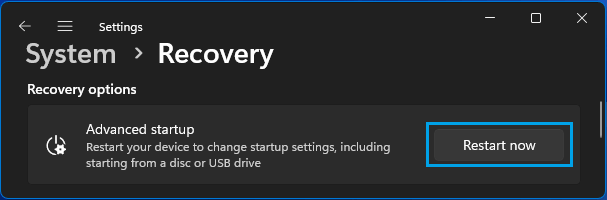
Windows 10: Go to Settings > Update & Security > Recovery > Click on Restart now button located under “Advanced Startup” section in the right-pane.
3. After the computer restarts, go to Troubleshoot > Advanced options > System Image Recovery.
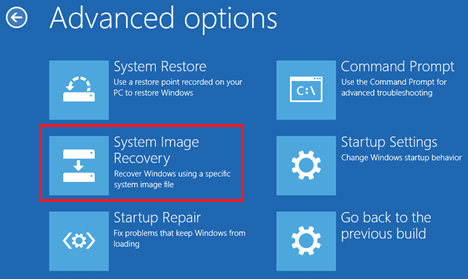
4. Wait for your computer to Restart and begin the process of preparing System Image Recovery
5. When prompted, select your User Account, Enter Password and click on Continue.
6. Your computer should automatically locate the latest System Image > Click on Next to move to the next screen.
7. Click on the Finish button to Restore the computer from the selected System Image Backup.
2. Recover Computer Using System Image (While Not Logged In)
If you are unable to start the computer, you can make use of a Bootable Windows USB Drive to boot the computer and then Restore the computer using the System Image Backup.
Note: You may need to change the Boot Order, if your computer does not boot up from USB Drive.
1. Plug the Bootable Windows USB Drive into the computer > press the Power button to start the computer.
2. After the computer starts, click on Repair this computer option, located at bottom-left corner of the screen.
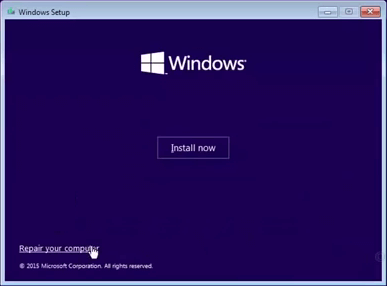
3. From the next screen, go to Toroubleshoot > Advanced options > click on System Image Recovery.
4. The Recovery Tool should prompt you to select the System Image > Connect the USB Flash Drive containing the System Image Backup to your computer and click on Refresh.
5. Select the System Image File from the attached USB Drive and click on Continue to start the Restore Process.
6. Follow the steps to complete the Restore process.